
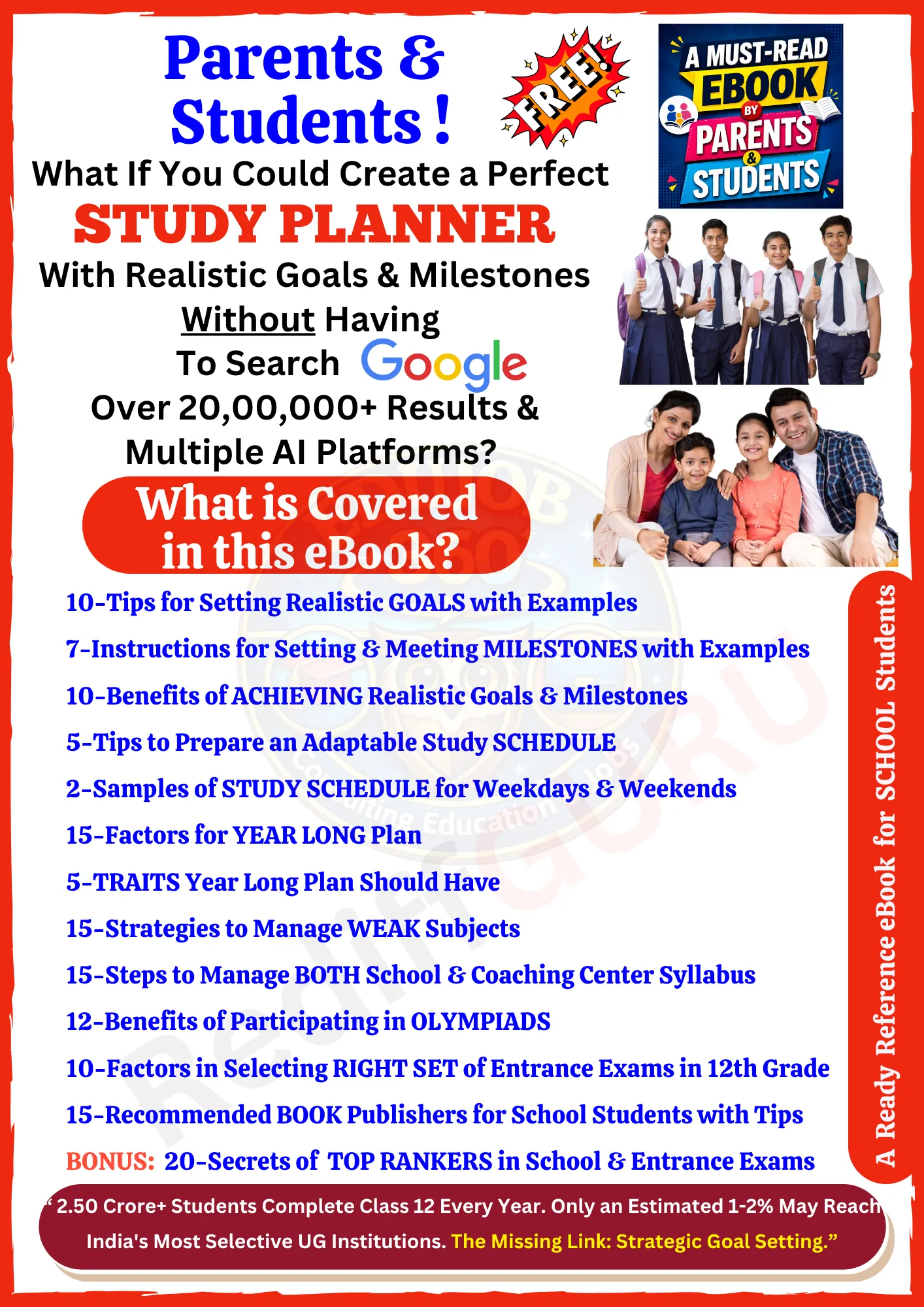
Study Planner for Students
The Study Planner is a practical reference guide designed to help school students and parents transform academic ambitions into realistic, measurable progress. It covers goal setting, milestones, adaptable daily schedules, year-long planning, weak-subject management, coordination of school and coaching syllabuses, Olympiad participation, entrance-exam selection, recommended study resources, and habits followed by high-performing students. The planner emphasizes SMART goals, consistent practice, progress monitoring, flexibility, time management, healthy routines, and timely guidance. It also encourages students to balance academics with extracurricular activities, physical activity, relaxation, and adequate sleep while preparing systematically for board examinations and competitive entrance examinations.
.webp)
Academic success rarely comes from studying harder alone. It requires knowing what to achieve, when to achieve it, how to measure progress, and when to adjust the approach. A thoughtful study planner helps students convert aspirations into manageable actions while enabling parents to provide timely encouragement, guidance, and support throughout the journey.
1. Realistic Goal Setting: Students should establish clear, measurable, achievable, relevant, and time-bound goals aligned with their strengths, interests, academic priorities, and longer-term educational aspirations.
2. SMART Academic Targets: Convert broad ambitions into measurable outcomes, such as improving Mathematics performance from 80% to 90%, supported by daily practice and additional learning sessions.
3. Meaningful Milestones: Break larger objectives into weekly, monthly, semester, and annual milestones with specific deadlines, enabling students to monitor progress and maintain consistent academic momentum.
4. Flexible Study Planning: A timetable should accommodate school, coaching, extracurricular activities, family commitments, examinations, relaxation, and changing academic requirements without becoming unnecessarily rigid.
5. Focused Study Sessions: Students can improve concentration by studying in manageable 35–45-minute blocks followed by short 5–10-minute breaks, rather than studying continuously for extended periods.
6. Healthy Daily Routine: Academic achievement should be supported by adequate sleep, nutritious meals, physical activity, relaxation, recreation, and balanced routines that help sustain concentration and overall wellbeing.
7. Effective Weekend Planning: Weekends can combine difficult-topic study, assignments, revision, practice questions, previous examination papers, hobbies, family time, and adequate relaxation for sustainable preparation.
8. Year-Long Preparation: Students should divide the academic year into meaningful phases involving goal setting, syllabus familiarization, regular study, practice tests, progress assessment, revision, and preparation for final examinations.
9. Continuous Plan Review: Effective planners are adaptable; students should periodically evaluate progress and modify schedules according to academic performance, school calendars, holidays, personal obligations, and emerging priorities.
10. Weak-Subject Management: Identify difficult subjects or concepts early, allocate additional study time, seek clarification, practise regularly, and maintain dedicated notes to strengthen understanding and confidence.
11. Visual Learning Techniques: Diagrams, mind maps, flowcharts, dedicated notebooks, and explaining concepts to others can strengthen comprehension, retention, revision, and understanding of complex academic topics.
12. Practice and Performance Analysis: Timed assessments should be followed by careful analysis of incorrect, skipped, and unusually time-consuming questions to identify weaknesses and improve speed and accuracy.
13. School-Coaching Coordination: Students managing school and coaching syllabuses should identify overlapping subjects, coordinate study schedules, review material regularly, and prioritize tasks according to examination requirements.
14. Doubt Resolution: Unresolved doubts should not accumulate. Students should promptly seek clarification from teachers, coaching faculty, parents, tutors, classmates, or reliable learning resources.
15. Olympiad Participation: Carefully selected Olympiads can strengthen conceptual understanding, logical reasoning, problem-solving, confidence, competitive exposure, academic profiles, and opportunities for recognition and scholarships.
16. Entrance-Exam Strategy: Students should select entrance examinations according to career interests, strengths, eligibility, examination patterns, preparation requirements, preferred institutions, programs, and realistic educational goals.
17. Multiple Opportunities: Instead of depending on one examination, students should consider several suitable entrance exams and compare colleges, branches, locations, costs, placements, infrastructure, accreditation, and other relevant factors.
18. Smart Resource Selection: Students should prioritize teacher- and expert-recommended books, use dependable resources thoroughly, and avoid purchasing excessive study material that may remain underutilized.
19. Top-Ranker Habits: High-performing students demonstrate consistent preparation, advance reading, classroom attentiveness, same-day revision, structured scheduling, regular practice, progress monitoring, resilience, and disciplined examination strategies.
20. Sustainable Success: Long-term achievement depends on realistic planning, disciplined daily action, regular review, consistent practice, learning from mistakes, timely guidance, resilience, and maintaining balance between ambition and wellbeing.
A successful academic journey is built through small, consistent actions rather than last-minute effort. Realistic goals, meaningful milestones, flexible routines, focused practice, regular evaluation, appropriate resources, and healthy habits can create stronger foundations for future opportunities. Students should remain ambitious yet adaptable, seek guidance when necessary, and continue learning from every experience.
SEEQUR publishing note
SEEQUR resources are reviewed before publishing. They are designed for clarity and education, not as a substitute for a personal session when individual guidance is needed.